
David Jolly, the Democratic nominee, running with Gwen Graham, faces Byron Donalds, the Republican nominee, running with state Sen. Bryan Avila, in the Florida governor race on Tuesday, November 3, 2026. Jolly is a former Republican member of Congress who later left the party and now leads the Democratic ticket. Donalds has represented Florida's 19th Congressional District since 2020. Both won their primaries on August 18, 2026. Six other candidates also appear on the ballot, plus two certified write-ins.[2]
How they got here
The state certified the primary results on Thursday, August 27, 2026. On the Democratic side, the joint ticket the state lists as David Jolly and Gwen Graham won 762,160 votes, 60.95 percent, in a six-way field.[1] On the Republican side, Byron Donalds won 811,131 votes, 47.79 percent, in an eleven-way field, which means he won his nomination with under half of his party's primary vote.[1] The two campaigns also handled the ticket differently. Florida elects the governor and lieutenant governor together on a single ballot line, and Jolly ran the primary with Gwen Graham already on his line. Donalds ran the primary as an individual and named Sen. Bryan Avila of Hialeah as his running mate on August 25, a week after the primary.[4] All numbers are from the Florida Division of Elections certified results.[1]
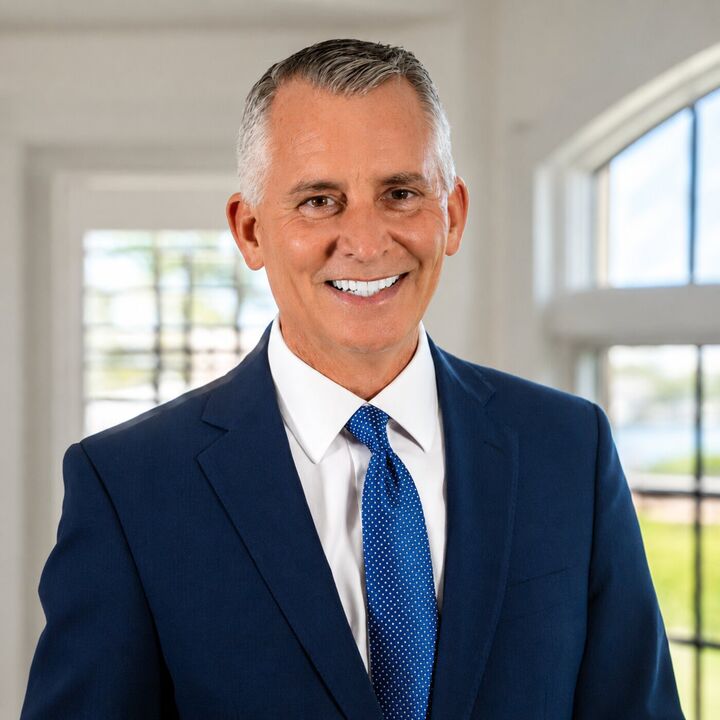
David Jolly and Gwen Graham.
David Jolly is a fifth generation Floridian, a former Member of Congress, and an attorney who has spent the campaign holding town halls in every corner of the state, focused on the cost of living, property insurance, and public schools. His running mate Gwen Graham represented Florida's 2nd District in Congress and has spent decades as a public school advocate. They are running to make Florida affordable for the people who make it work.
Byron Donalds' record, from the record
These are votes, not characterizations, and each one is on file with the U.S. House Clerk or the Florida Legislature.[5] As a state representative, Donalds voted no on the Marjory Stoneman Douglas High School Public Safety Act on March 7, 2018, the school safety law passed after the Parkland shooting.[6] In Congress, he voted yes on January 6 and 7, 2021 on the objections to counting Arizona's and Pennsylvania's electoral votes.[5] He voted no on both 2021 background check bills and no on the 2022 Bipartisan Safer Communities Act.[5] He voted no on the Respect for Marriage Act, both times it came to the floor. He voted no on the Inflation Reduction Act, the law that let Medicare negotiate drug prices and capped Medicare insulin costs at 35 dollars a month, and no on the bipartisan infrastructure law. In 2025 he voted yes on the One Big Beautiful Bill Act, the budget law that changed Medicaid and SNAP eligibility and financing rules; it passed the House 218 to 214.[5] On the trail he has pledged to pursue repealing homestead property taxes, and Gun Owners of America says he pledged in its candidate survey to support expanding constitutional carry to adults 18 and older and repealing Florida's red flag law, a law passed under a Republican governor after Parkland.
The money and the ratings
The money is not close. As of August 17, 2026, Florida Phoenix reported Donalds had raised more than 111 million dollars across his campaign and his political committee, with about 99 million of it raised by the committee Friends of Byron Donalds.[7] Jolly had raised roughly 10 million dollars across his own two accounts. Those are pre-primary news figures, and the official filings live with the Florida Division of Elections.[8] The ratings tell a more interesting story. All three major race raters favor the Republican, but two of the three have moved the race toward competitive. The Cook Political Report moved it from Solid Republican to Likely Republican on August 27, writing that Jolly's ability to reach independents and disaffected Republicans makes this a unique contest that could possibly become competitive, even while noting Donalds enjoys an overwhelming financial advantage.[9] Sabato's Crystal Ball moved it to Likely Republican in July.[10] Inside Elections still rated it Solid Republican as of August 18.[11]
Questions people ask about this matchup
Q. Have Jolly and Donalds agreed to debate?
No debate has been confirmed by either campaign. Donalds publicly challenged Jolly to three debates on July 20, 2026, before his own primary was decided, and Jolly replied the same day: "Get through your primary and we'll talk." A host consortium has announced a debate for October 15, 2026 at Florida Atlantic University, but neither campaign has accepted it on the public record, and the Republican Party of Florida said no statewide debates have been sanctioned.
Q. Who is leading the polls?
No independent public poll of this matchup has been released since the August 18 primary. The most recent independent poll, from the University of North Florida in July, found Donalds 46 and Jolly 41 before the primary. A Democratic internal poll fielded August 10 to 13 found Jolly 46 and Donalds 45, a statistical tie inside its margin of error. Our polls page tracks every public survey with its sponsor and field dates.
Q. Was David Jolly really a Republican?
Yes. Jolly served in Congress as a Republican and later left the party. He is now the Democratic nominee, running with former Democratic Rep. Gwen Graham. The Cook Political Report called it a strong ticket and cited Jolly's potential reach with independents and disaffected Republicans.
Q. Who are the running mates?
Gwen Graham, a former U.S. Representative from Florida, is Jolly's running mate and appeared with him on the primary ballot line. Bryan Avila, a sitting state senator representing part of Miami-Dade County, was named by Donalds on August 25, 2026, a week after the primary.
Q. Who else is on the ballot?
Eight candidates are certified for the governor's race: Jolly, Donalds, Libertarian Scott Jewett, and five candidates with no party affiliation. Two certified write-in candidates also qualified; their names do not appear printed on the ballot.
Q. When is the election?
Tuesday, November 3, 2026. The registration deadline is October 5, the vote-by-mail request deadline is 5 p.m. on October 22, and statewide early voting runs October 24 through 31. Our dates page has every deadline.
Sources
[1] Florida Division of Elections, certified 2026 primary results
[2] Florida Division of Elections, certified general election candidate list
[3] Florida Constitution, Article IV Section 5, the joint ticket provision
[4] Florida Senate, Sen. Bryan Avila member page
[5] U.S. House Clerk, roll call votes
[6] Florida Senate, SB 7026 of 2018, the Marjory Stoneman Douglas High School Public Safety Act
[7] Florida Phoenix, August 17, 2026
[8] Florida Division of Elections, campaign finance database
[9] The Cook Political Report, move to Likely Republican, August 27, 2026
[10] Sabato's Crystal Ball, University of Virginia Center for Politics
[11] Inside Elections
Compare the plans for yourself.
See where David stands on the cost of living, property insurance, and public schools, issue by issue.
Where David standsThe choice is a record, not a slogan.
Both of these men have voting records. This page keeps the receipts current through Election Day.